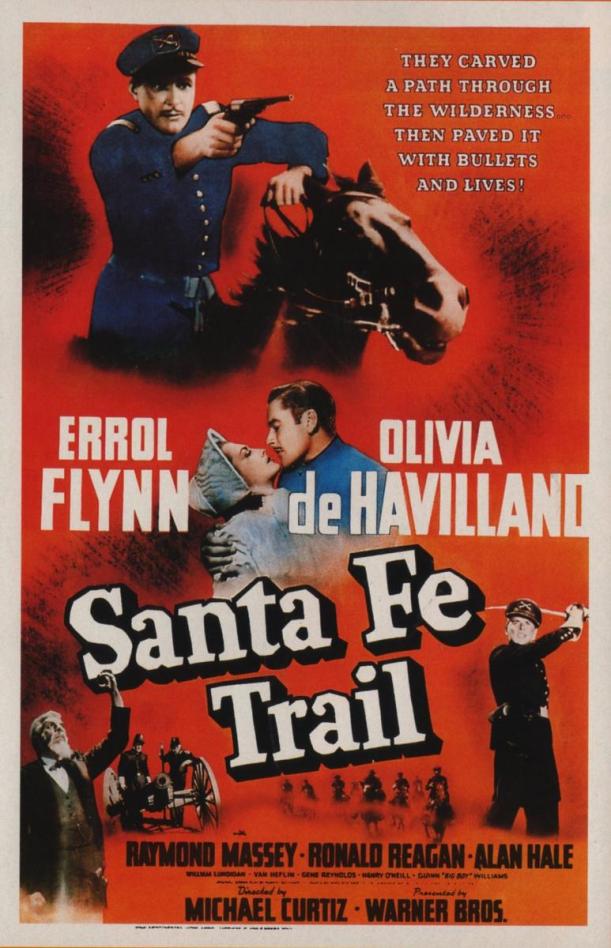
Santa Fe Trail is a 1940 American western film directed by Michael Curtiz and starring Errol Flynn, Olivia de Havilland, Raymond Massey and Ronald Reagan. Written by Robert Buckner, the film is about the abolitionist John Brown and his fanatical attacks on slavery as a prelude to the Civil War. Subthemes include J.E.B. Stuart and George Armstrong Custer as they duel for the hand of Kit Carson Holliday.
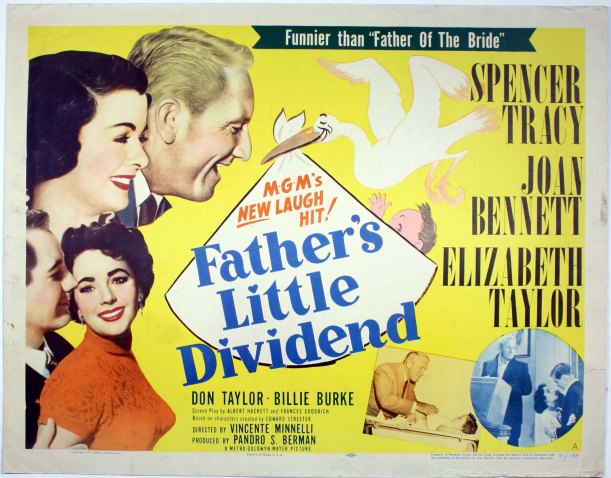
In this sequel to Father of the Bride (1950), newly married Kay Dunstan announces that she and her husband are going to have a baby, leaving her father, Stanley Banks, having to come to grips with becoming a grandfather.
Middle class family man Stanley Banks reminisces on events of the past year: One afternoon, returning from the office feeling happy and energetic, Stanley’s routine is interrupted when his wife Ellie tells him that they are having dinner with their daughter Kay and her husband, Buckley Dunstan, to hear some important news. Although Stanley is certain that it concerns Buckley’s business, the newlyweds reveal that Kay is expecting a baby. Buckley’s parents, Doris and Herbert, are delighted, as is Ellie, but Stanley broods that he is too young and vibrant to be a grandfather. Soon Ellie, flush with excitement, throws Kay a baby shower, something Stanley thinks is highway robbery not punishable by law. Later, Ellie suggests that they remodel their house to enable Kay, Buckley and the baby to move in with them, but Stanley puts his foot down. Ellie is near tears when the wealthy Dunstons announce that they are planning to add a wing to their home for the couple, but is overjoyed when Kay and Buckley reveal that they have just bought their own little house, enabling Ellie to have free rein helping Kay decorate.
In 1642 in Leyden, Holland, Rembrandt van Rijn, a painter and miller’s son, experiences the death of his beloved wife Saskia and, during her funeral, finishes her portrait before her face fades for him forever. Later, while working on a painting commissioned by Captain Banning Cocq, Rembrandt depicts the sixteen gentlemen of the civic guard as disfigured. After humiliating them at a public unveiling of the painting, Rembrandt refuses to apologize and loses the portrait commissions that had assured his income. Still racked with grief about Saskia’s death, Rembrandt longs for another wife and marries the cold and shrewish Geertje Dirx. Ten years following Saskia’s death, Rembrandt has become bankrupt, and his house and its furnishing are sold at auction. He then paints a beggar and tells him the Biblical story of David and Saul. Geertje harangues Rembrandt about their poverty, and he learns that Govaert Flinck, an old student of his, is now making a handsome living painting aristocrats. Rembrandt, however, refuses to compromise his art for money. Because the king was once Rembrandt’s patron, Rembrandt finally agrees to see the prince, but goes instead to his father’s mill in Leyden and reads from the Bible at dinner. When he returns to Amsterdam, he meets his new housemaid, Hendrickje Stoffels, and paints her portrait. Jealous of Rembrandt’s attentions toward the kind and beautiful maid, Geertje threatens her. Rembrandt is intent on marrying her, but knows that half of Geertje’s money will go to Rembrandt’s son Titus if he remarries. When Hendrickje becomes pregnant, Geertje charges her with “unchastity, concubinage and immoral conduct.” Hendrickje is tried before a jury of Lutheran elders and is ex-communicated from the church. A forced sale of Rembrandt’s property drives him and Hendrickje into the country. When he sells a painting of the Blessed Virgin to an art buyer for the cardinal in Paris, the court purloins his paintings for his creditors, claiming that he has no right to sell his own work. Hendrickje cunningly becomes Rembrandt’s art dealer and the official owner of his paintings and is able to sell them. Hendrickje then gets sick from nursing their baby and sends the child to her mother.
Rembrandt Wallpaper for iPhone 6 Plus
In light of Hendrickje’s failing health, Rembrandt decides to marry her and, as Titus arrives with his bride, Rembrandt sends for the baby and Hendrickje’s mother. He then paints Hendrickje’s portrait as he did when they met, and she falls dead while posing. Years later, in 1669, Rembrandt has become a beggar and recites profound words to a group of young painters, who finally recognize him. He then begins a self-portrait, muttering the Biblical words of King Solomon, “vanity of vanities, all is vanity.”
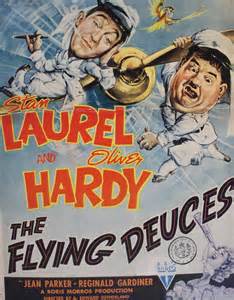
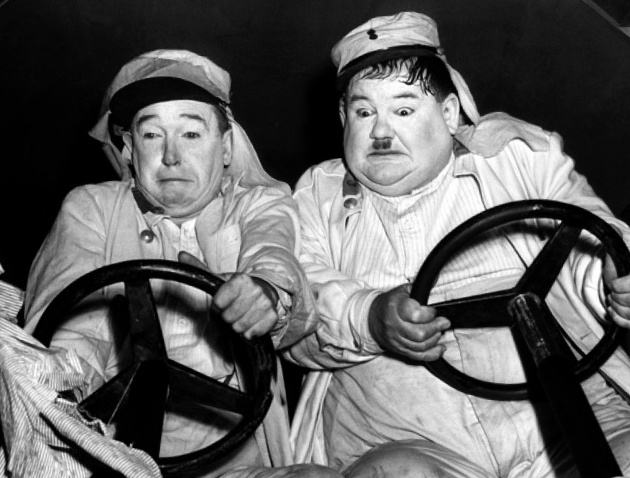
The Flying Deuces, also known as Flying Aces, is a 1939 comedy film starring Laurel and Hardy, in which the duo join the French Foreign Legion. It is a partial remake of their 1931 short film Beau Hunks.
Jack (Lou Costello) and his “agent,” Mr. Dinkel (Bud Abbott), are struggling to find work through an employment agency. They land a gig baby-sitting a troublesome boy named Donald (David Stollery). Trying to get the child to sleep, Jack reads him the fairy tale “Jack and the Beanstalk” which subsequently lulls Jack asleep, transporting him into the fantasy world of the storybook. There, he encounters magic beans, a giant and a princess in distress, among other things.
In the early days of World War II, a German U-boat is sunk in Canada’s Hudson Bay. Hoping to evade capture, a small band of German soldiers led by commanding officer Lieutenant Hirth (Eric Portman) attempts to cross the border into the United States, which has not yet entered the war and is officially neutral. Along the way, the German soldiers encounter brave men such as French-Canadian fur trapper Johnnie (Laurence Olivier) and soldier Andy Brock (Raymond Massey).
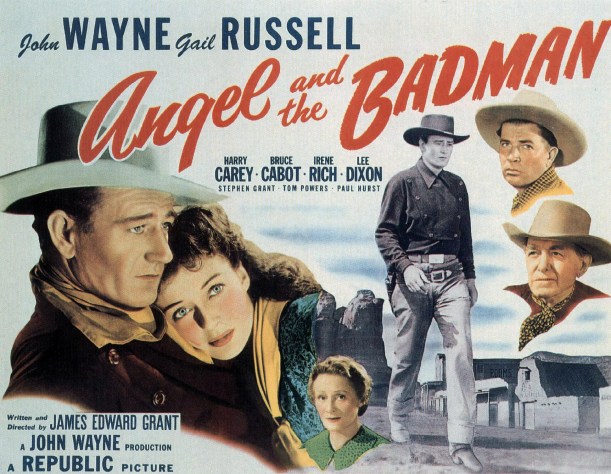
Wounded and on the run, notorious gunman Quirt Evans gallops onto a farm owned by Quaker Thomas Worth and his family and promptly collapses from exhaustion. When Quirt urgently insists upon sending a telegram, Thomas and his daughter Penelope drive him into town in their wagon. After wiring a claim to the land recorder’s office, Quirt kisses Penny and then passes out. Ignoring the doctor’s advice to rid themselves of the gunfighter, the compassionate Worth family tends to the delirious Quirt, and Penny becomes intrigued by his ravings of past loves. Days later, Quirt regains consciousness and Penny patiently explains the family’s credo of non-violence. Three weeks later, Laredo Stevens and Hondo Jeffries ride into town looking for Quirt. When Penny’s younger brother Johnny rushes home to inform Quirt of his visitors, Quirt quickly prepares to flee, and Penny, now smitten with Quirt, offers to run off with him. At the sound of approaching horses, Quirt grabs his gun and discovers that it has been emptied. Training his gun on the doorway, Quirt calmly greets Hondo and Laredo. Thinking that Quirt has the upper hand, Laredo, who has come for Quirt’s deed to the land, offers to buy his claim. When Quirt sets the price at $20,000, Laredo hands over $5,000 in gold and challenges him to come for the balance when he is able. Afterward, Quirt saddles his horse with the intention of leaving, but when Penny begs him to stay, he changes his mind. Later, while helping with the farm chores, Quirt learns that cantankerous rancher Frederick Carson has dammed up the stream that runs through the valley, thus draining the Worths’ irrigation ditches. Immediately proceeding to the Carson ranch, Quirt demands that Carson open the dam, and Carson, intimidated by Quirt’s reputation, complies. Soon after, water flows onto the Worths’ land, and in gratitude, Mrs. Worth treats a boil on Carson’s neck and plies him with baked goods. This newly attained accord between neighbors gives Quirt a sense of accomplishment. One Sunday, Penny asks Quirt to join the family for a ride. Before they leave, Marshal Wistful McClintock comes to question Quirt about a stagecoach robbery and the family swears that Quirt was with them at the time of the robbery. The marshal then asks Quirt why he resigned as Wyatt Earp’s deputy, sold his cattle spread and crossed over to the wrong side of the law soon after cattleman Walt Ennis was gunned down by Laredo in a saloon brawl. When Quirt refuses to answer, the marshal leaves. Penny then begs Quirt to steer clear of Laredo and he acquiesces because of his love for her. As Quirt and the Worths ride to the Quaker gathering, Quirt’s erstwhile sidekick, Randy McCall, stops them along the trail and decides to tag along. While the Quakers commence their meeting, Randy tells Quirt that Laredo plans to rustle a herd of cattle and suggests that they then steal the herd from Laredo and let him take the blame. As Randy finishes outlining his plot, Mr. Worth awards Quirt with a Bible for ending the feud with Carson. Fearing that he will never be able to live up to Penny’s expectations, Quirt abruptly leaves with Randy. Reaching the pass just as Laredo’s gang gallops down to stampede the herd, Quirt and Randy attack the rustlers and steal the herd from them. In the town of Rim Rock that night, Quirt and Randy celebrate their victory with showgirls Lila Neal and Christine Taylor. When Lila, sensing a change in her old flame, teases Quirt about his Bible, Quirt becomes angry and rides back to the Worth farm. Overjoyed by his return, Penny throws her arms around him just as the marshal arrives to question Quirt about the rustling. Quirt states that Lila can provide him with an alibi, causing Penny to become jealous. Although the marshal warns Quirt that he is the wrong man for Penny and will inevitably wind up at the end of a rope, Quirt decides to propose to her anyway. Instead of replying, Penny invites Quirt to join her picking blackberries. As they wander through the bushes, Quirt, prodded by Penny’s questions, recalls his childhood. Reared by the kindly Walt Ennis after his parents were massacred by Indians, the young Quirt found himself alone once again after Ennis was murdered in a saloon fight. His story completed, Quirt and Penny begin the journey home when their wagon is ambushed by Laredo and Hondo. Spooked, the horses gallop out of control, causing the wagon to plunge over a cliff into the river,
temporarily submerging both Penny and Quirt. When Penny develops a life-threatening fever due to the accident, Quirt straps on his pistol and rides to town to exact revenge. After Quirt leaves, Penny’s fever suddenly breaks, and she regains her lucidity. In town, Quirt is about to draw down on Laredo and Hondo when Penny and her family arrive in their wagon. No longer driven by revenge, Quirt surrenders his gun to Penny. As Laredo and Hondo prepare to gun down Quirt, the marshal appears and shoots them both. After Quirt renounces lawlessness in favor of farming and rides off in the Worths’ wagon with Penny, the marshal picks up Quirt’s discarded weapon from the dust.
The New Adventures of Sherlock Holmes was an old-time radio show which aired in the USA from October 2, 1939 to July 7, 1947. Most episodes were written by the team of Dennis Green and Anthony Boucher.
Originally, the show starred Basil Rathbone as Sherlock Holmes and Nigel Bruce as Doctor Watson. Together, they starred in 220 episodes which aired weekly on Mondays from 8:30 to 9:00pm. Bromo Quinine sponsored some of the earlier programs on the NBC Blue Network and for a period Parker Pen was the sponsor. The show first aired on the Blue Network but later moved to the Mutual Broadcasting System. It was originally broadcast from Hollywood. During World War II, the show was also broadcast overseas through the Armed Forces Radio Service. It is unknown exactly how many of the original 220 shows have survived, 53 are currently known to be in circulation.
Basil Rathbone’s last episode as the famous Detective was “The Singular Affair of the Baconian Cipher.” He was eager to separate himself from the show to avoid being typecast as Sherlock Holmes, and even though the show’s sponsor Petri Wine offered him generous pay to continue, he decided to move on. Once he did, the sponsor did as well, and Tom Conway took the starring role, though Nigel Bruce got top billing and was always announced first. The new sponsor was Kreml Hair Tonic for Men, and the new series lasted only 39 episodes. Bruce and Conway then left the series. From then until 1950 the series continued as “Sherlock Holmes” with various actors playing the two principal parts.
With Rathbone and Bruce, the show exhibited an interesting introduction. The sponsor’s spokesman, usually Knox Manning or Harry Bartell, or, during the show’s initial season and again in the final season, Joseph Bell, would show up weekly at Dr. Watson’s house (then retired and living in California), and share a story about Holmes and his adventures over a glass of Petri wine. This offered them the chance to sometimes bring in other characters to contribute to the story, and also gave Watson a chance to summarize or add additional titbits at the end. Another interesting thing about this radio show’s introductions was Dr. Watson’s anecdotes and comments about his dogs usually referred to as the “Puppies.”











 WeaveStream